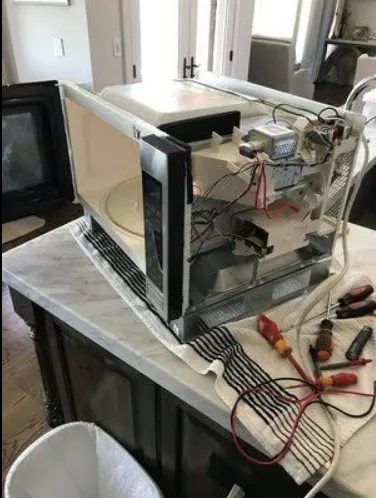
Oven Convection Fan Not Working? 6 Causes and What to Do
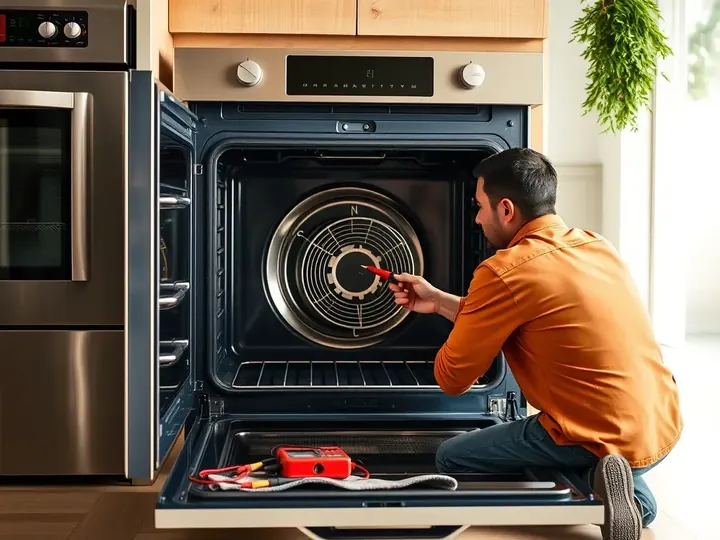
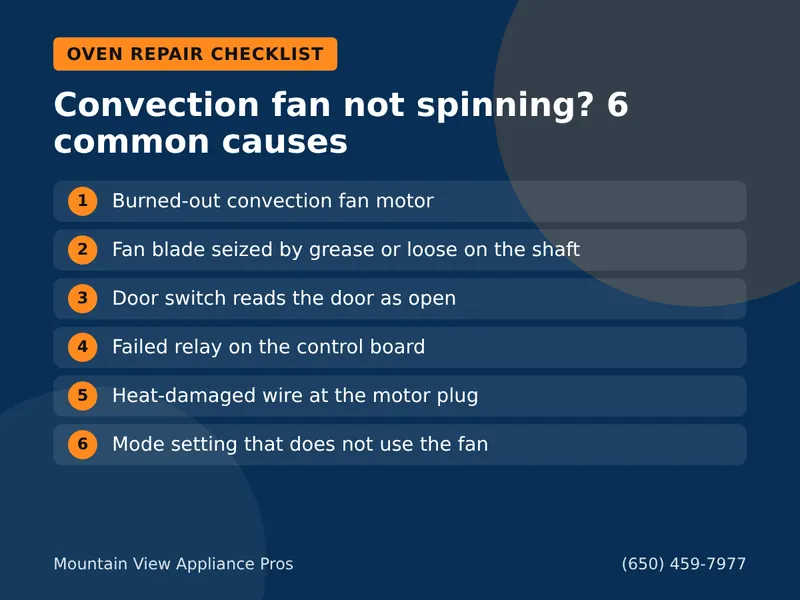
A convection fan that will not spin is usually a failed fan motor, a seized blade, a door switch or a relay on the control board. Here is how to narrow it down.
Read the guidePlain-language help from our Mountain View technicians: what is going wrong, what you can check safely, and when to call.
Call Now – (650) 459-7977Simple answers to the appliance problems we see most often in Mountain View homes.
A convection fan that will not spin is usually a failed fan motor, a seized blade, a door switch or a relay on the control board. Here is how to narrow it down.
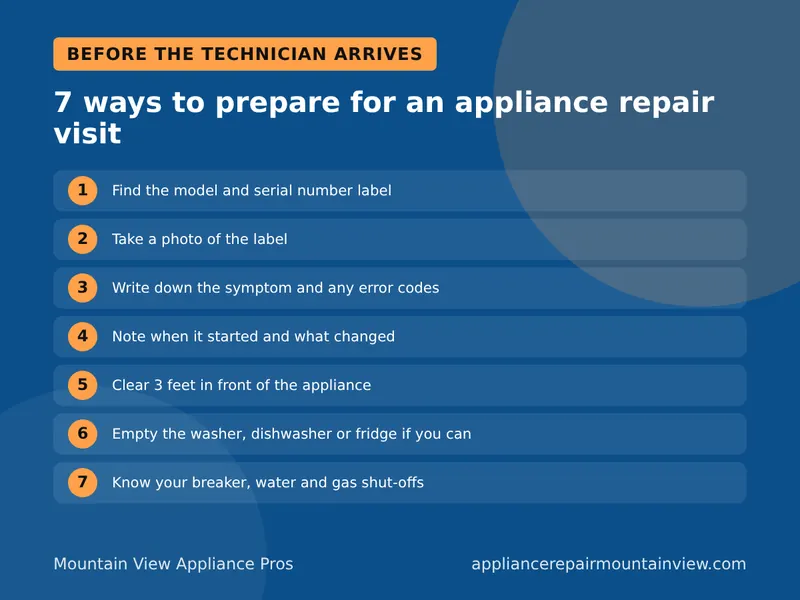
Read the guideA good repair visit starts with a diagnosis, a clear price and your OK before work begins. Here is what to have ready and what to ask so the repair goes fast.
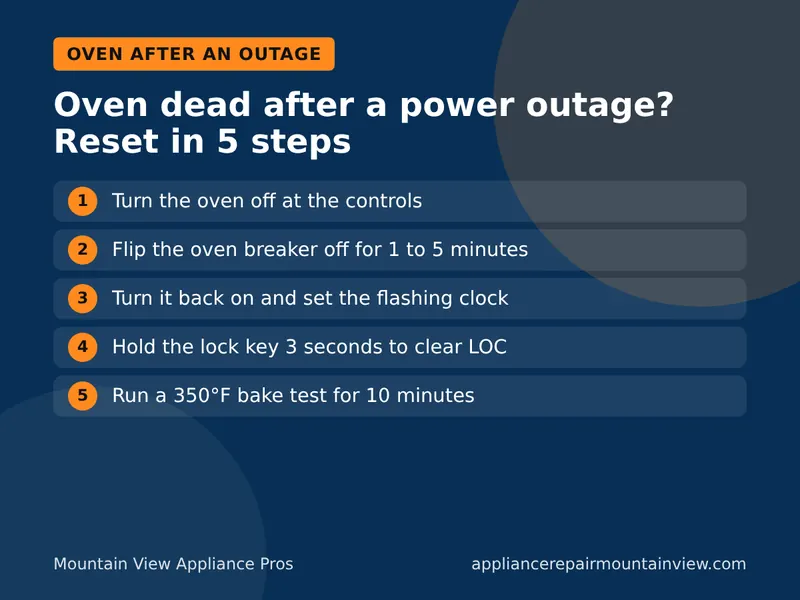
Read the guideMost ovens come back with a breaker reset and a clock set. If the display stays dark or the oven will not heat, a surge may have hit a fuse or board.
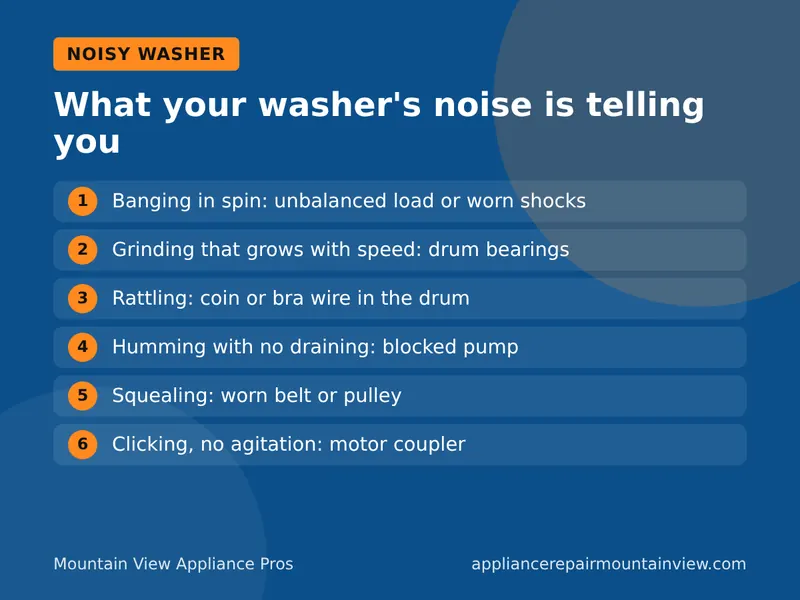
Read the guideBanging usually means an unbalanced load. Grinding during spin points to bearings. Humming with no draining points to the pump. Here is how to tell them apart.
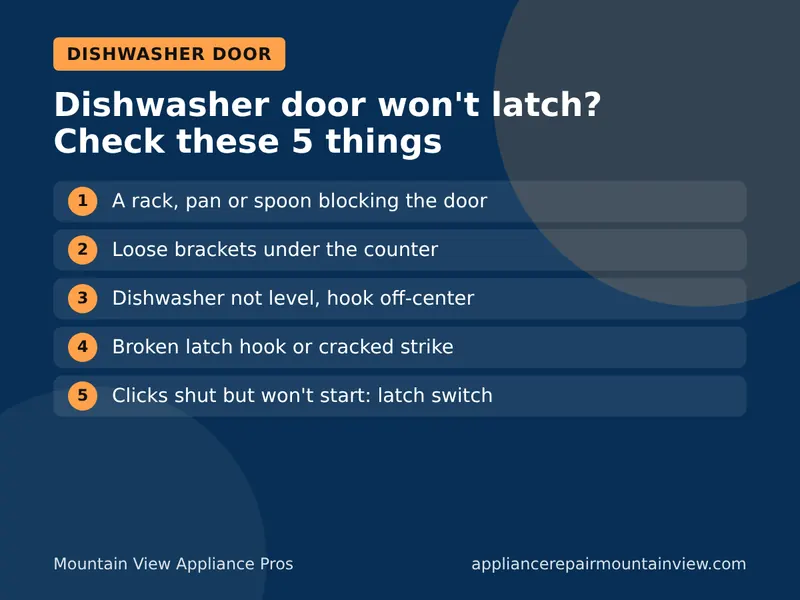
Read the guideA rack sticking out, a bent strike or a worn latch are the usual causes. If the door closes but the dishwasher will not start, the latch switch may have failed.
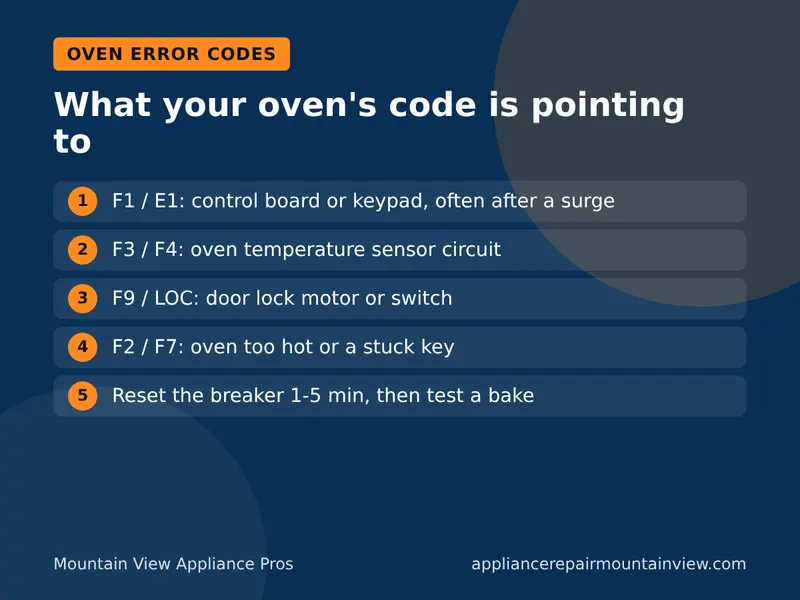
Read the guideMost oven codes fall into four groups: control board, temperature sensor, door lock and overheating. Here is how to read them and what to try first.
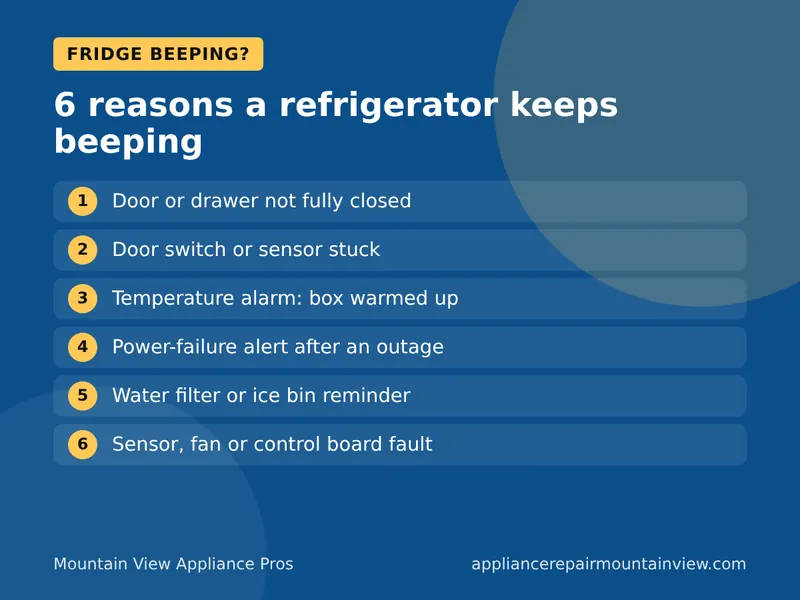
Read the guideMost fridge beeping is the door alarm or a temperature alert. A beep that will not stop with the doors shut points to a switch, sensor or board.
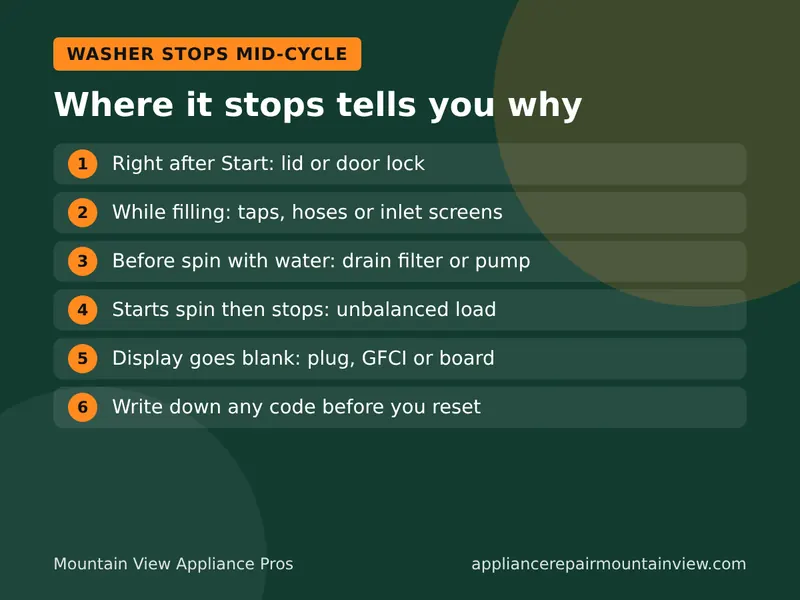
Read the guideA washer that stops mid-cycle usually has a lid or door lock fault, an unbalanced load, a drain or fill problem, or a control that lost power.
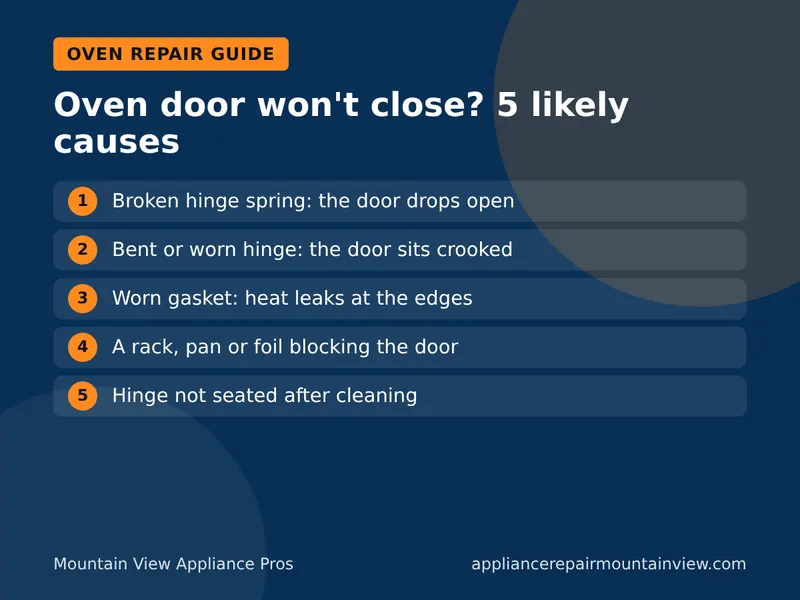
Read the guideAn oven door that will not shut tight usually has a bent or broken hinge, a snapped spring, a torn gasket or a rack in the way.
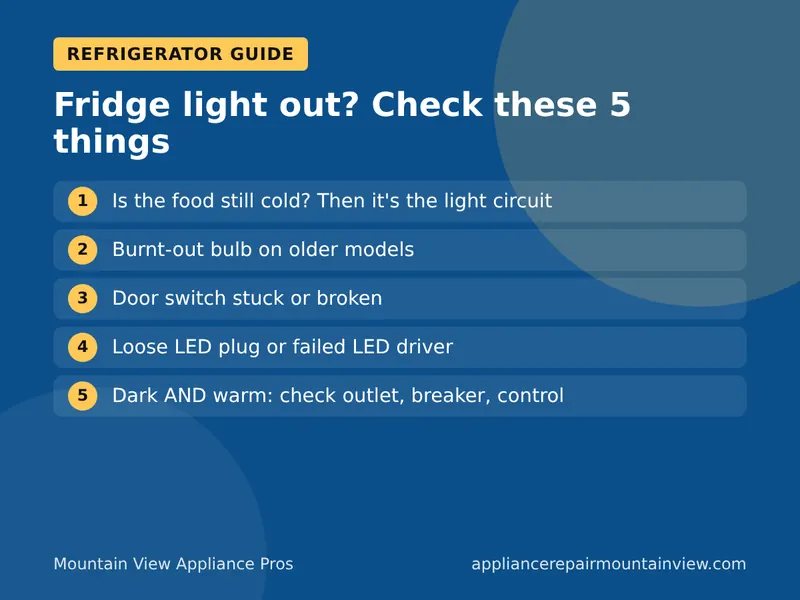
Read the guideA dark fridge with cold food usually needs a bulb, a door switch or an LED driver. A dark fridge that is also warm points to a power or control problem.
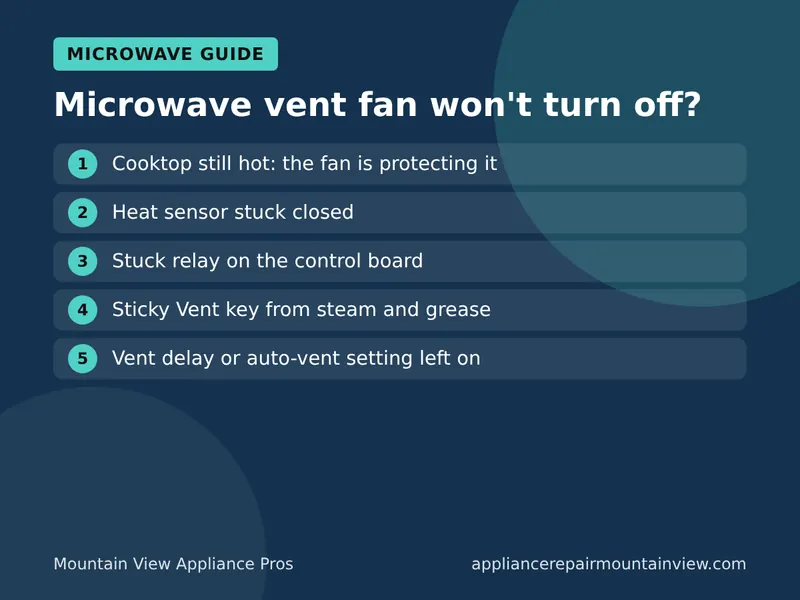
Read the guideAn over-the-range microwave fan that keeps running is often doing its job: protecting the microwave from cooktop heat. If it runs when the stove is cold, a sensor or relay may be stuck.
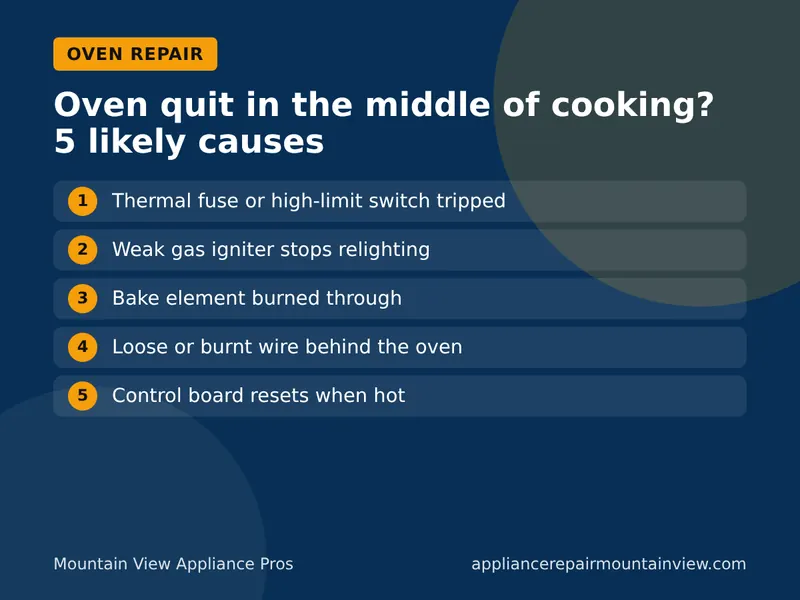
Read the guideAn oven that quits mid-cook usually has an overheating safety fuse, a weak igniter, a failing element or a control board that resets itself.
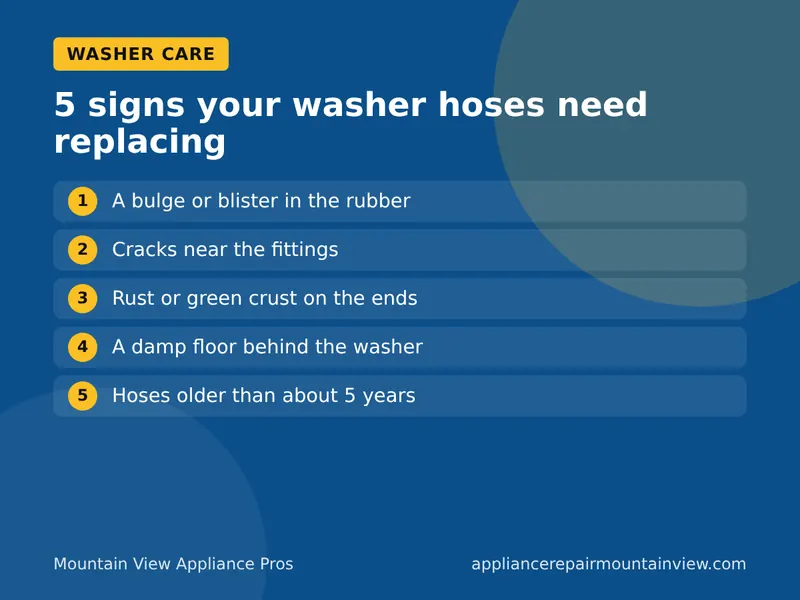
Read the guideRubber washer fill hoses wear out in about 5 years. Bulges, cracks, rust at the ends and damp floors are the signs to replace them.
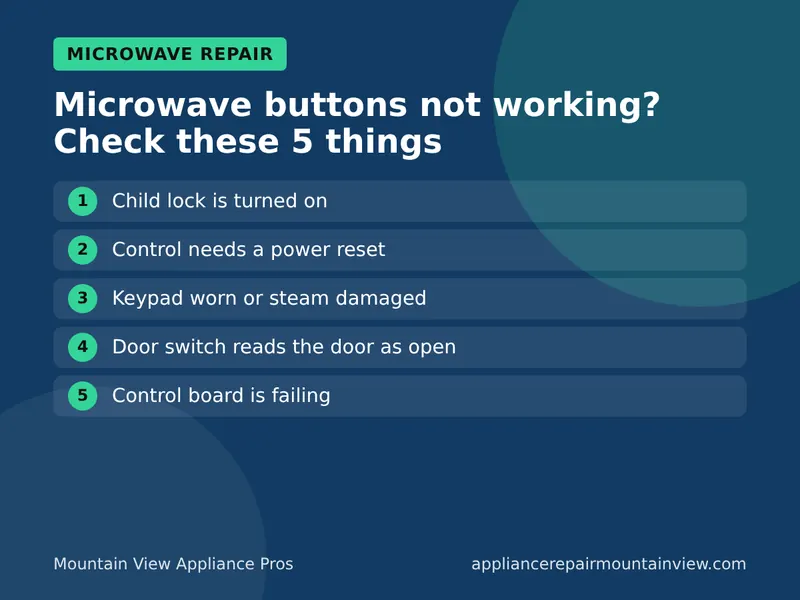
Read the guideA microwave that ignores button presses is often in child lock or needs a reset. A worn keypad or a failing control board is next.
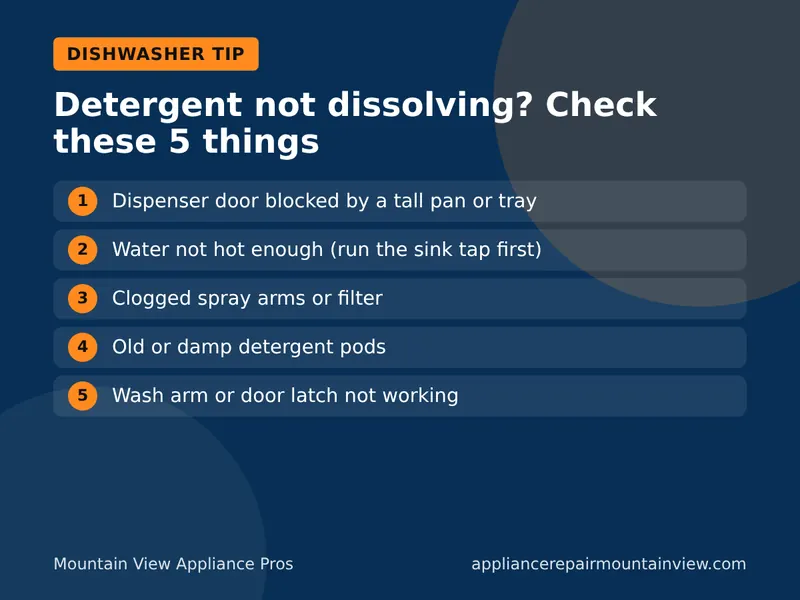
Read the guideDetergent that stays in the cup is usually blocked by a dish, hit by too little hot water, or left behind by a dispenser door or spray arm that is not working.
Read the guideA turntable that stops is usually off its track, dirty, sitting on a worn coupler, or driven by a failed turntable motor.
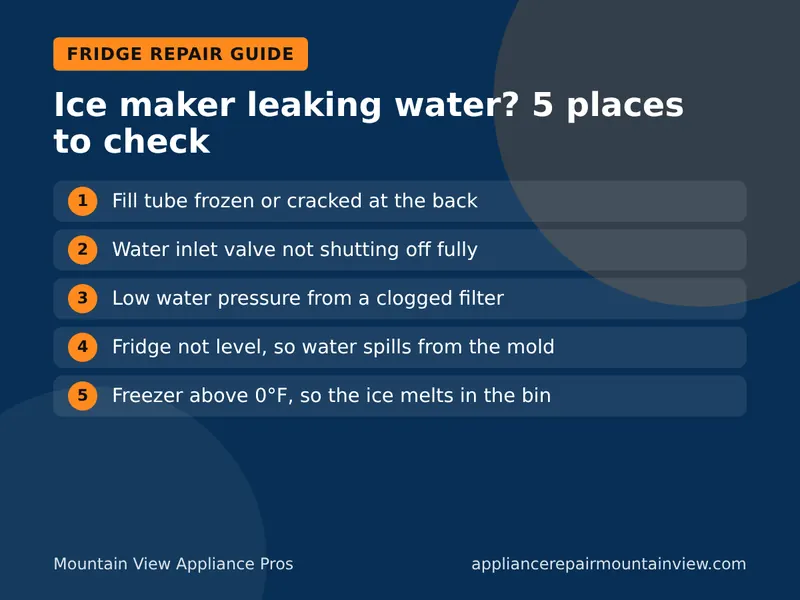
Read the guideA leaking ice maker usually has a frozen fill tube, a valve that will not close, low water pressure, or a fridge that is not level.
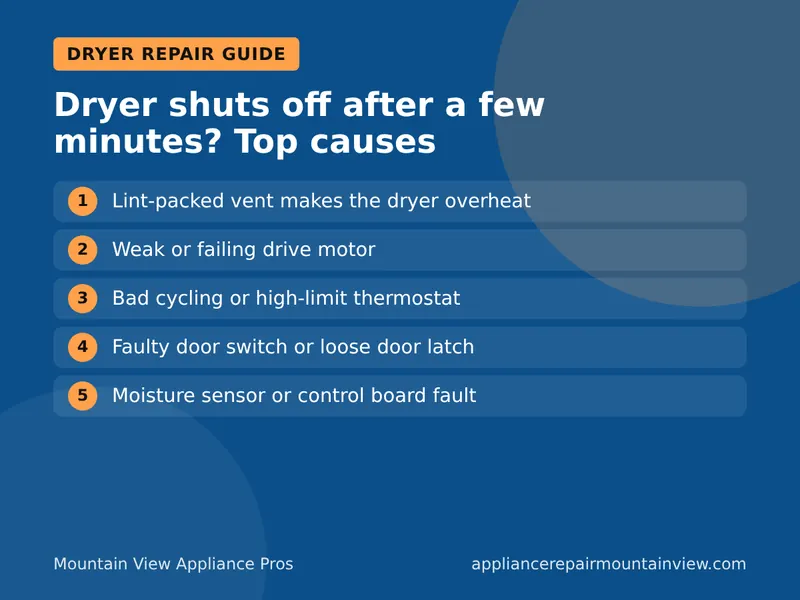
Read the guideA dryer that starts and then stops is usually overheating from a clogged vent, or has a weak motor, a bad thermostat or a faulty door switch.
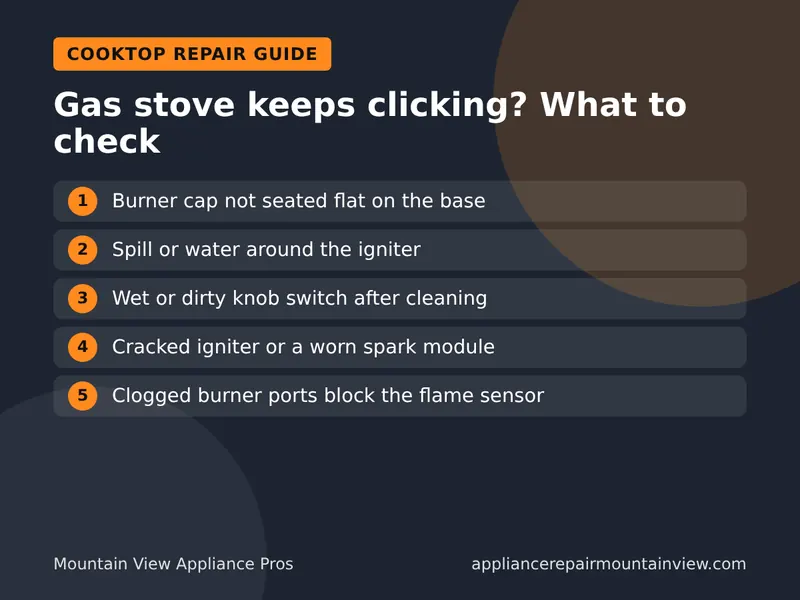
Read the guideNonstop clicking usually means a burner cap is out of place, the igniter is wet or dirty, or a knob switch or spark module has worn out.
Read the guideWhen the display works but the oven stays cold, the cause is usually the bake element, the gas igniter, a sensor or a safety fuse.
Read the guideSparks inside a microwave usually come from metal, a burned waveguide cover or chipped cavity paint. Here is what to do and when to stop using it.
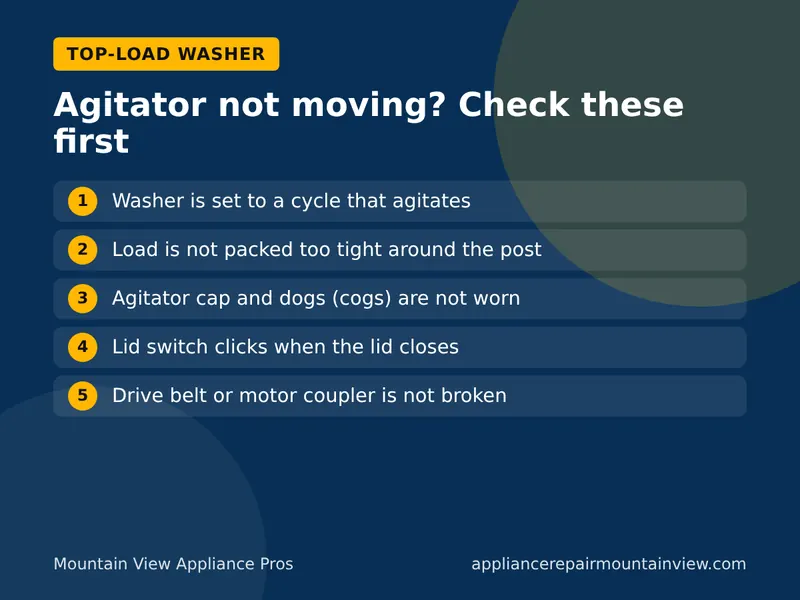
Read the guideIf a top-loader fills and drains but clothes do not move, the agitator dogs, lid switch, belt or motor coupler is usually to blame.
Read the guideMost front-load washers that stop draining have a clogged pump filter. Here is how to find it and clean it without flooding the floor.
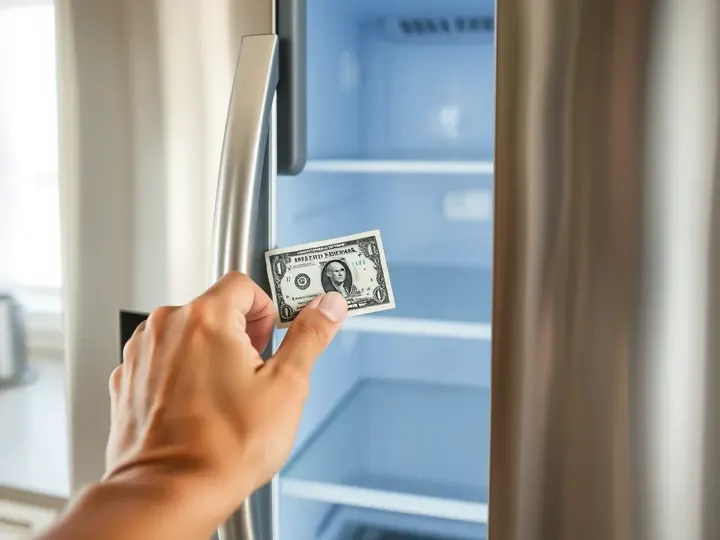
Read the guideA worn or dirty door gasket lets warm air in, so your fridge runs longer, frosts up and spoils food. Here is how to test it.
Read the guideGritty plates and cloudy glasses usually trace back to a clogged filter, blocked spray arms, cold water or a hard water film.
Read the guideA dishwasher that hums but stays dry usually has a closed supply valve, a stuck float or a failed inlet valve.
Read the guideA dead oven is often a breaker, a lock setting or a clock that needs setting. A weak igniter or burnt element is next.
Read the guideA dryer that runs too hot is usually short of airflow. Lint in the vent is the top cause and a real fire risk.
Read the guideA fridge that runs nonstop is working too hard. Dirty coils, a weak door seal or a defrost problem are the usual causes.
Read the guideA washer that won't start is often a door lock, lid switch, child lock or power problem. Here is what to check first.
Read the guideBad smells usually come from a dirty filter, food in the drain or standing water. Here is how to clean it and when a part is to blame.
Read the guideA dryer that hums, heats or runs without turning the drum usually has a broken belt, a worn roller or a motor problem.
Read the guideSome dishwasher sounds are normal. Grinding, loud humming or squealing usually point to a pump, motor or spray arm problem.
Read the guideThick frost in a frost-free freezer is not normal. A bad door seal or a failed defrost part is usually to blame.
Read the guideWet dishes after a full cycle can be normal on plastic, or a sign of a failed heater or vent. Here is how to tell the difference.
Read the guideInduction cooktops need the right pans, clean vents and steady power. Here is what a blinking burner or error code usually means.
Read the guideA washer door that stays locked usually has water still inside or a lock that failed. Here is the safe way to get your clothes out.
Read the guideA puddle under the washer can come from a hose, the door seal, the drain pump or too much soap. Here is how to find which one.
Read the guideIf clothes need two cycles to dry, the vent, the lint screen or a worn heat part is often to blame. Here is what to check.
Read the guideFrozen lettuce and icy milk usually mean a setting, a blocked vent or a stuck damper. Here is what to check.
Read the guideNo water from the fridge door, or only a slow trickle? A filter, a frozen line or a closed valve is often to blame. Here is what to check.
Read the guideA dryer that won't start often has a tripped breaker, a door switch or a blown fuse. Here is the order to check things.
Read the guideA washer that won't fill, or fills very slowly, often has a closed valve, a kinked hose or a clogged screen. Here is what to check.
Read the guideSoaking wet clothes after a full cycle usually mean the washer never spun. Most causes are simple. Here is where to start.
Read the guideA dishwasher that won't start often has a simple fix, like a latch, lock or tripped outlet. Here is the order to check things.
Read the guideSelf-clean runs the oven very hot, and that heat can lock the door or blow a fuse. Here is what to do if your oven acts up after cleaning.
Read the guideSoft ice cream and slow ice usually point to airflow, frost or a failing fan. Here is what to check first and when to call.
Read the guideA puddle in front of the dishwasher or under the sink? These are the usual causes and the quick checks that can save your floor.
Read the guideEach dryer noise points to a different part. Here is how to match the sound to the cause before a small problem becomes a bigger one.
Read the guideSome fridge sounds are normal and some are early warnings. Here is how to tell a healthy hum from a failing fan, compressor, or ice maker.
Read the guideA washer that bangs or walks during spin is usually unbalanced, not level, or has worn suspension parts. Here is how to find the cause.
Read the guideWhether you have coil burners, a glass top, or induction, here is what usually stops one burner from heating and what you can safely check.
Read the guideThe light is on, the plate turns, and the food stays cold. Here is what usually fails, why it is not a DIY repair, and how to decide what to do.
Read the guideIf your dryer tumbles but the clothes stay cold, the cause is usually a fuse, heating element, igniter, or gas valve. Here is how to narrow it down.
Read the guideStanding water after a cycle usually means a clogged filter, a blocked drain hose or disposal, or a failed drain pump. Here is how to check each.
Read the guideNo ice, slow ice, or small hollow cubes usually come down to water supply, freezer temperature, or a failed part. Here is how to tell which.
Read the guideA puddle under the fridge usually comes from a clogged defrost drain, a leaking water line, or a bad filter housing. Here is how to find it.
Read the guideThat musty smell comes from moisture, soap residue, and lint trapped in the gasket, drum, and filter. Here is how to clean it and keep it away.
Read the guideStanding water at the end of a cycle usually means a clog, a kinked hose, or a failed pump. Here is how to find which one, step by step.
Read the guideBurnt edges, raw middles, and cakes that rise on one side are classic signs. Here is how to test your oven and find the cause.
Read the guideLuxury built-in appliances need a different approach. Here is what to know about warranty service, common repairs, and choosing a technician.
Read the guideCloudy glasses and gritty plates are not always the dishwasher's fault. Here is how Mountain View's water plays a part, and what to check first.
Read the guideClicking but no flame is one of the most common cooktop problems. Here is what causes it, what is safe to clean, and when to call for help.
Read the guideTypical 2026 repair prices for every major appliance in Mountain View, what makes a repair cost more, and your rights to a written estimate in California.
Read the guideYour fridge is running but the milk is warm. Here are the seven most common causes, what you can safely check, and when it is time to call a technician.
Read the guideClothes still damp after a full cycle usually means a lint or vent problem. Here is why that matters for fire safety and what you can do about it.
Read the guideUse the 50% rule, typical appliance lifespans, and a few simple questions to decide whether to fix your appliance or buy a new one.
Read the guideOur phone line is open 24/7. Tell us what your appliance is doing and we will book the first open visit.
(650) 459-7977 Call Now – (650) 459-7977