Oven Convection Fan Not Working? 6 Causes and What to Do
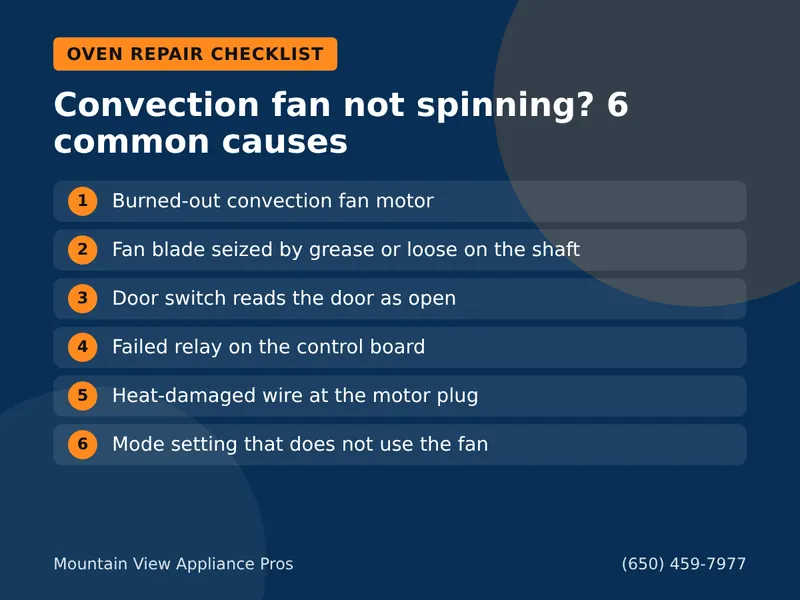
A convection fan that will not spin is usually a failed fan motor, a seized blade, a door switch or a relay on the control board. Here is how to narrow it down.
Read the guideYour fridge hums along, but the milk is warm and the butter is soft. Here is what usually causes it, what you can check yourself, and when to call for help.
Call Now – (650) 459-7977
A refrigerator that runs but won't cool usually has an airflow problem, a dirty condenser, a failed fan, a defrost fault, or a bad start relay or thermostat. Most of these are fixable parts. A sealed system leak or a dead compressor is less common and costs more to fix.
First, find out how warm it really is. Put an appliance thermometer in a glass of water on the middle shelf and check it after a few hours. FoodSafety.gov's cold storage chart says your fridge should hold 40°F or below and your freezer 0°F. If you are above that, keep reading.
Cold air flows from the freezer into the fresh food section through small vents. A packed shelf, a tall container, or a bag pushed against the back wall can block that flow. The freezer stays cold while the fridge warms up. Move food away from the vents and give it a few hours.
The condenser coils release heat from your fridge. When they are coated in dust and pet hair, the fridge runs longer and cools less. On most models the coils sit behind a grille at the bottom front or on the back. Unplug the fridge and vacuum them with a brush attachment once or twice a year.
Many fridges use a small fan near the compressor to push air over the coils. If you hear the compressor running but the fan is still, or the back of the fridge feels very hot, the fan motor may have failed. This is a common, affordable repair.
The evaporator fan sits in the freezer and blows cold air into both sections. If it stops, the freezer may still feel cold near the coils, but the fridge warms up. You may hear a squeal or no fan sound at all when you open the freezer door.
Frost-free fridges melt frost from the evaporator coils several times a day. When a defrost heater, thermostat, or control fails, ice builds up and blocks airflow. A thick layer of frost on the back wall of the freezer is the classic sign.
If the fridge clicks every few minutes but the compressor never stays on, the start relay may be the problem. A thermostat or temperature sensor that reads wrong can also stop the fridge from calling for cooling.
A refrigerant leak or a worn compressor is the least common cause, and the most costly. Signs include a compressor that runs all the time with almost no cooling, or oily spots near the tubing. This work requires a certified technician.
In Mountain View (ZIP codes 94040, 94041 and 94043), we see three patterns. Summer heat waves push older fridges in garages and warm kitchens past what they can handle. French door models from Samsung and LG in newer North Bayshore and Whisman Station homes often have evaporator fan and ice-buildup problems. Built-in Sub-Zero and Thermador units in Cuesta Park and Waverly Park homes usually need condenser cleaning or sealed system checks.
If your fridge sits in a garage or a sunny spot, give it a few inches of space on each side so it can shed heat. Built-in models pull air through the top or bottom grille, so keep that grille clear. For a technician who works on all of these brands, see our refrigerator repair in Mountain View page.
You can check the temperature setting, the door seals, the vents inside, and the condenser coils. These checks take about 15 minutes and need no tools beyond a vacuum.
If the fridge is still warm after these checks, the problem is likely a part that needs testing. Our refrigerator repair service covers all of these faults on every major brand, including built-in Sub-Zero and Thermador units.
Fridge warm and food at risk? We treat no-cooling calls as a priority, day or night.
Keep the doors closed as much as you can. Move the most perishable items, such as milk, meat, and leftovers, into a cooler with ice. Throw out anything that has been above 40°F for more than 2 hours.
The FDA has a clear guide on keeping food safe when the fridge loses cold. It was written for power outages, but the same rules apply when your fridge breaks.
Repair it if the fridge is under about 10 years old and the problem is a fan, relay, thermostat, or defrost part. Consider replacing it if the sealed system has failed on an older, lower-cost model.
See our typical repair costs in Mountain View for price ranges. If you do replace, the ENERGY STAR refrigerator guide explains how to compare running costs. For more help with the choice, read our guide on whether to repair or replace an appliance.
Keep the fridge at 40°F or below and the freezer at 0°F. A cheap appliance thermometer on the middle shelf is the easiest way to check.
Keep the doors closed. A closed fridge usually keeps food cold for about 4 hours. After that, throw out perishable food that has been above 40°F for 2 hours or more.
Often, yes. Fan motors, thermostats, defrost parts, and relays are affordable repairs. A sealed system problem in an older, low-cost fridge may be a reason to replace instead.
Tell us what your appliance is doing. We will quote the visit on the phone and book the first open slot, often the same day.
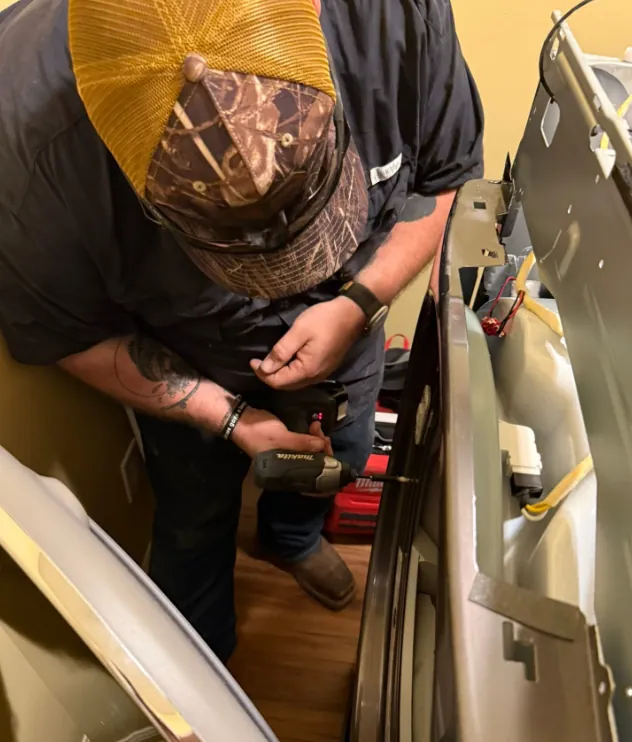
A convection fan that will not spin is usually a failed fan motor, a seized blade, a door switch or a relay on the control board. Here is how to narrow it down.
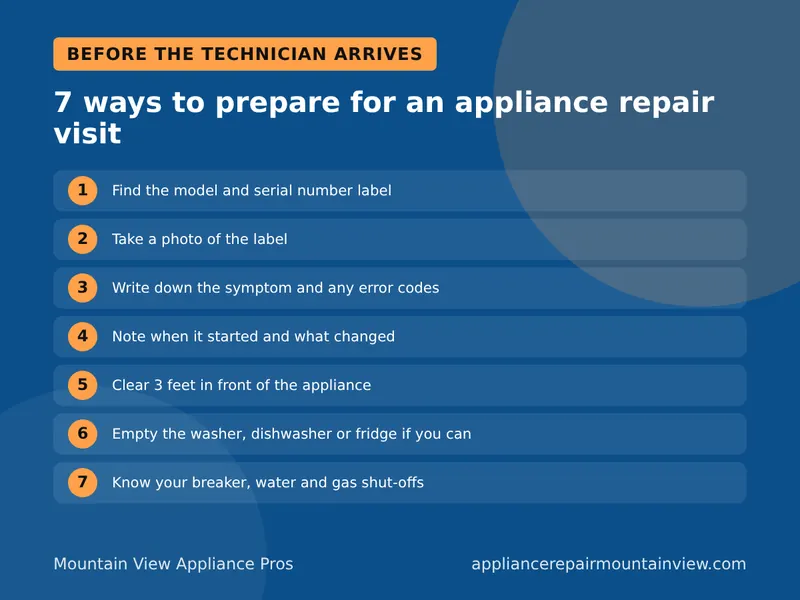
Read the guideA good repair visit starts with a diagnosis, a clear price and your OK before work begins. Here is what to have ready and what to ask so the repair goes fast.
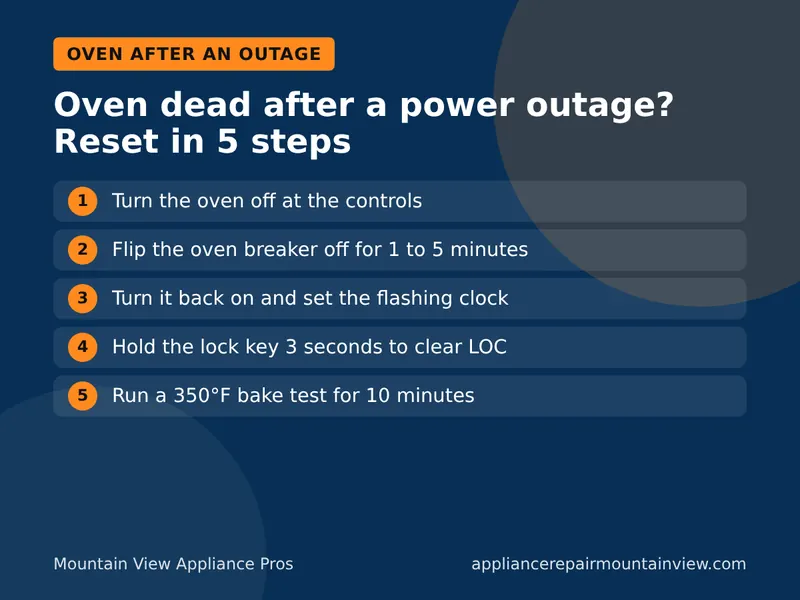
Read the guideMost ovens come back with a breaker reset and a clock set. If the display stays dark or the oven will not heat, a surge may have hit a fuse or board.
Read the guideCall now to talk to a real person, any time of day or night.
(650) 459-7977 Call Now – (650) 459-7977