Oven Convection Fan Not Working? 6 Causes and What to Do
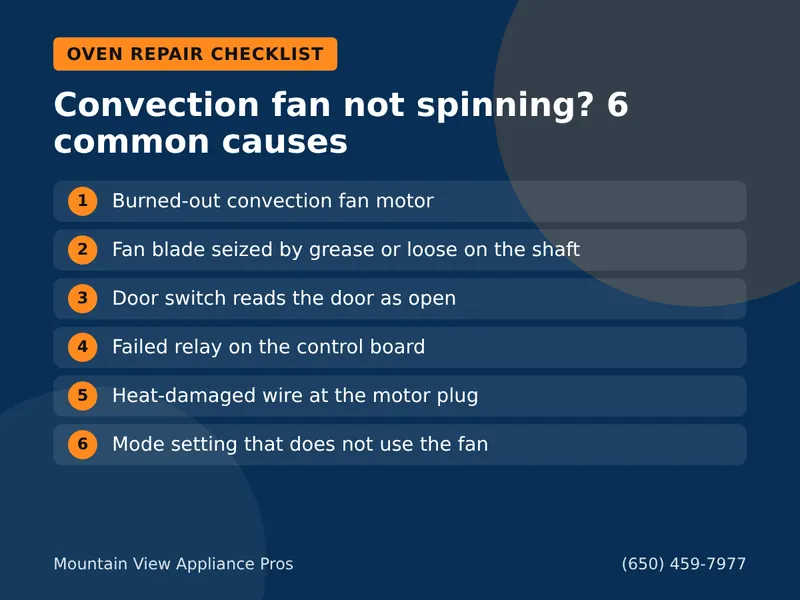
A convection fan that will not spin is usually a failed fan motor, a seized blade, a door switch or a relay on the control board. Here is how to narrow it down.
Read the guideThe two hoses behind your washer hold water under full house pressure all day, even when the washer is off. When an old one bursts, it can pour out gallons a minute. Here is how to tell when they are due.
Call Now – (650) 459-7977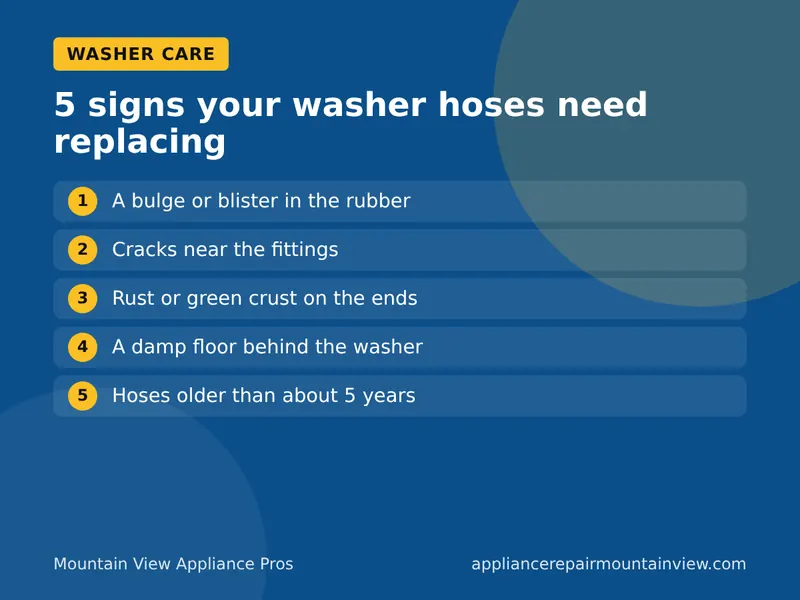
Replace rubber washer fill hoses about every 5 years, and right away if you see a bulge, a crack, rust or green crust at the fittings, or a damp floor behind the washer. The hoses hold full water pressure all day, even when the washer is off, so a worn hose can burst without warning and flood the room.
Washer acting up as well? Our team handles washer repair Mountain View for front-load and top-load machines from LG, Samsung, Whirlpool, Maytag, Bosch and GE.
A soft bump on the hose means the inner layer has failed. This is the sign that a burst is close. Replace it now.
Bend the hose gently near each fitting. Fine cracks in the rubber mean it has dried out.
Corrosion means water has been seeping at the connection. Mountain View's water can leave mineral crust here too.
Run your hand along the floor behind the washer. Any water there should be traced right away.
If you do not know their age, they are probably due. Write the date on a tag when you replace them.
A burst fill hose keeps pouring water until someone shuts off the valve. Unlike a drain leak, it does not stop when the cycle ends. In an upstairs laundry or a closet next to a bedroom, the water can soak into subfloor, drywall and carpet before anyone notices.
Wet drywall and flooring that stay damp for more than a day or two can grow mold. If a leak has already soaked the room, this mold remediation cost calculator gives a rough idea of cleanup costs by area. The EPA's guide to mold and moisture explains why fast drying matters.
Water behind the washer? Call now for washer repair in Mountain View.
Call if water is coming from inside the washer, if the valves behind it are stuck or leaking, or if the washer keeps filling after it shuts off. That last one points to a failed inlet valve, which can flood the room just like a burst hose. If water shows up under the washer during the drain step instead, see our guide on a washer leaking water.
Something else acting up? These guides may help: my oven wont turn on, my oven is not heating up all the way, washer wont drain and dishwasher no water.
Plain rubber fill hoses should be replaced about every 5 years, or sooner if you see bulges, cracks or rust. Braided stainless hoses last longer, but they should still be checked once a year.
They resist bursting better than plain rubber, but the inside is still a rubber tube. They can fail at the crimped ends. Check them yearly and replace them when they show wear.
It is a good habit if you are away for more than a day or two. The valves behind the washer stop water pressure from sitting in the hoses.
Yes. Hoses are often replaced during a washer repair visit, and a technician can also check the inlet valve screens and the drain hose. Most washer repairs in Mountain View cost about $150 to $450.
Tell us what your appliance is doing. We will quote the visit on the phone and book the first open slot, often the same day.
A convection fan that will not spin is usually a failed fan motor, a seized blade, a door switch or a relay on the control board. Here is how to narrow it down.
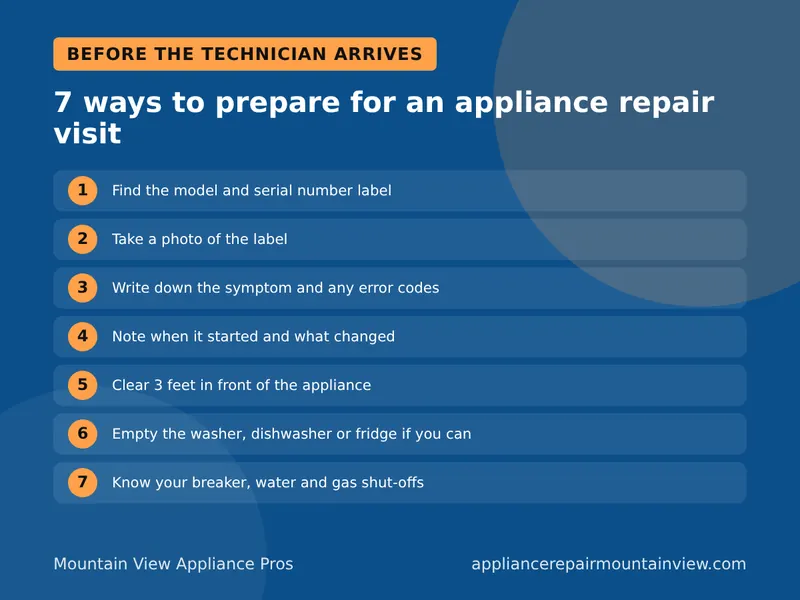
Read the guideA good repair visit starts with a diagnosis, a clear price and your OK before work begins. Here is what to have ready and what to ask so the repair goes fast.
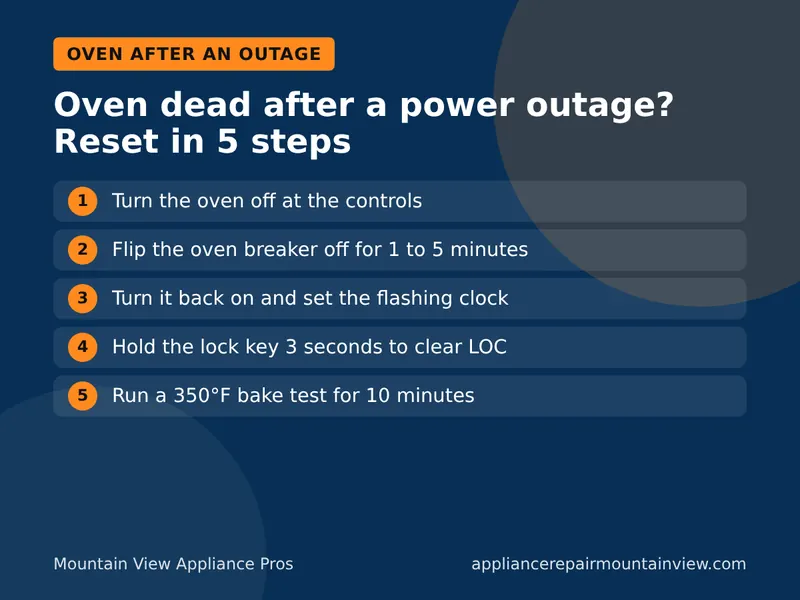
Read the guideMost ovens come back with a breaker reset and a clock set. If the display stays dark or the oven will not heat, a surge may have hit a fuse or board.
Read the guideCall now to talk to a real person, any time of day or night.
(650) 459-7977 Call Now – (650) 459-7977