Oven Convection Fan Not Working? 6 Causes and What to Do
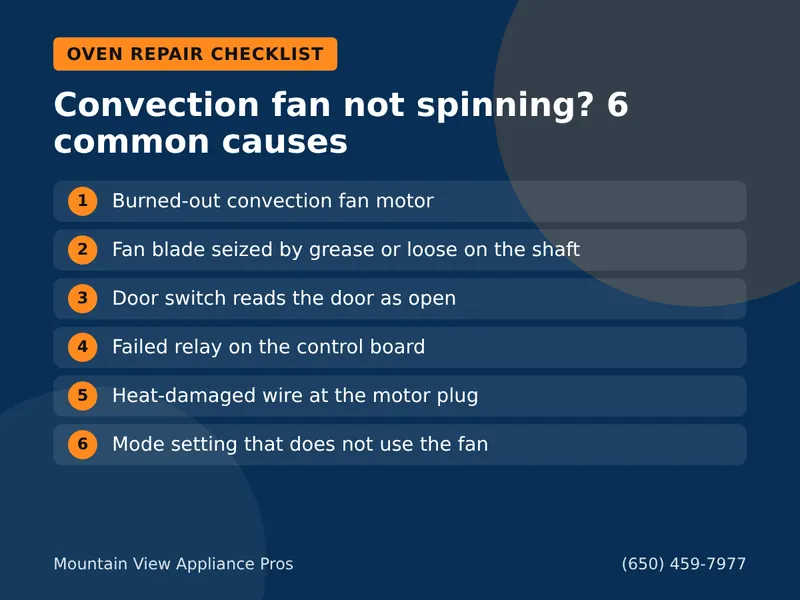
A convection fan that will not spin is usually a failed fan motor, a seized blade, a door switch or a relay on the control board. Here is how to narrow it down.
Read the guideThe light is on and the turntable spins, but your food comes out cold. Here is what usually causes it, what you can safely check, and why the rest is a job for a technician.
Call Now – (650) 459-7977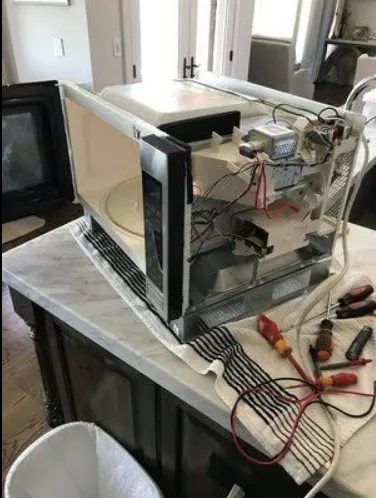
A microwave that runs but won't heat usually has a failed magnetron, high-voltage diode, high-voltage capacitor, or door switch. These parts make or control the energy that heats food. The light and turntable run on a separate circuit, so they can work even when heating has stopped.
It helps to know how a microwave works. A high-voltage circuit powers the magnetron, which makes the microwaves that heat your food. If any part of that circuit fails, the oven seems to run normally but nothing gets hot.
No, not inside the cabinet. The high-voltage capacitor can store a dangerous electrical charge even after the microwave is unplugged. Opening the cover without training and the right tools can cause a serious shock.
The FDA's microwave oven safety page also warns not to use a microwave if the door does not close firmly or is bent, warped, or damaged, and to stop using it if it keeps running with the door open.
Microwave not heating or sparking? Stop using it and call us. A technician can safely test the high-voltage parts.
The magnetron makes the microwaves. When it fails, the oven runs but does not heat, sometimes with a loud hum or buzz.
These parts boost the voltage that powers the magnetron. A failed diode is one of the most common reasons a microwave stops heating.
Microwaves have several door switches for safety. If one fails, the oven may not heat, may blow a fuse, or may not start at all.
A failed control board can stop the heating circuit even when the display and buttons seem to work.
If your microwave is heating unevenly or weakly, food may not reach a safe temperature. Use your stove or oven instead until it is fixed, and check reheated food with a thermometer.
The USDA's guide to cooking safely with microwave ovens explains why cold spots matter and how to heat food evenly.
Over-the-range and built-in microwaves are usually worth repairing, because replacing them also means removing and installing a heavy unit. Countertop models under a few years old may be worth fixing too, but low-cost ones are often cheaper to replace. Our repair or replace guide walks through the decision.
Our microwave repair service covers over-the-range and built-in models from Sharp, Panasonic, GE, Whirlpool, Samsung, LG, Wolf, and Thermador. See typical prices in our repair cost table.
The most common causes are a failed magnetron, high-voltage diode, high-voltage capacitor, or a door switch. A blown internal fuse can also stop heating on some models.
Only the simple checks. A microwave's high-voltage capacitor can hold a dangerous charge even when it is unplugged, so internal repairs should be done by a trained technician.
Built-in and over-the-range microwaves are often worth repairing because they cost more to replace and install. A low-cost countertop microwave is usually cheaper to replace.
Tell us what your appliance is doing. We will quote the visit on the phone and book the first open slot, often the same day.
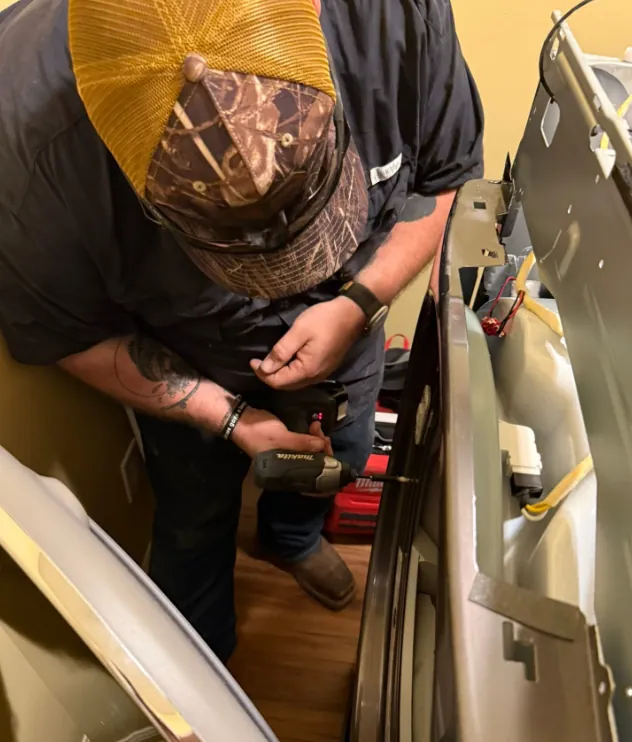
A convection fan that will not spin is usually a failed fan motor, a seized blade, a door switch or a relay on the control board. Here is how to narrow it down.
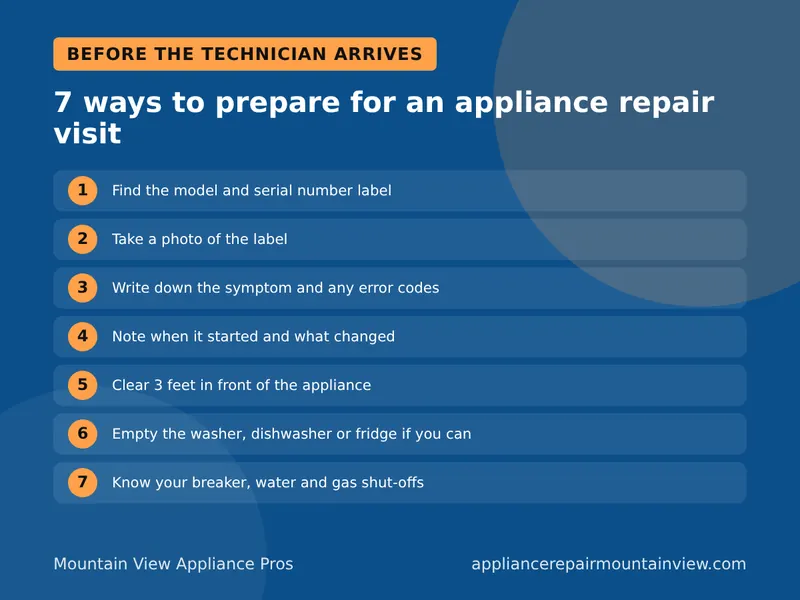
Read the guideA good repair visit starts with a diagnosis, a clear price and your OK before work begins. Here is what to have ready and what to ask so the repair goes fast.
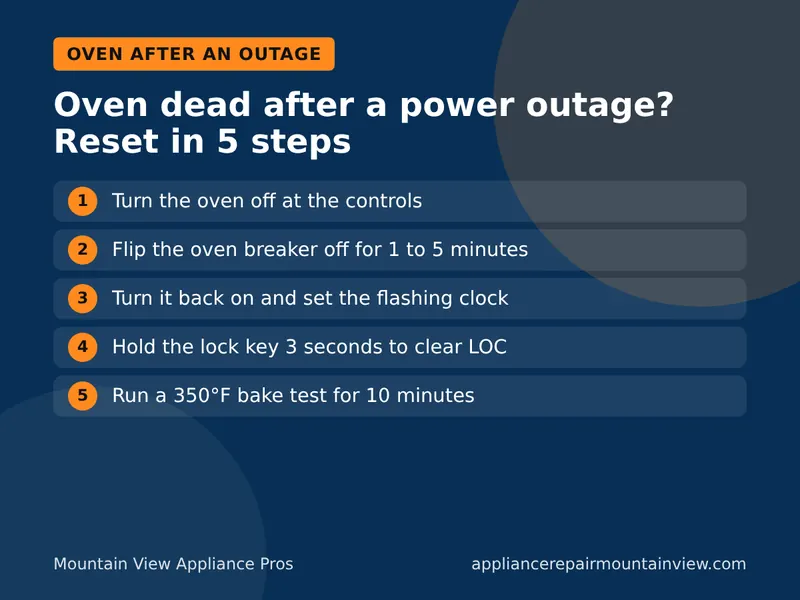
Read the guideMost ovens come back with a breaker reset and a clock set. If the display stays dark or the oven will not heat, a surge may have hit a fuse or board.
Read the guideCall now to talk to a real person, any time of day or night.
(650) 459-7977 Call Now – (650) 459-7977