Oven Convection Fan Not Working? 6 Causes and What to Do
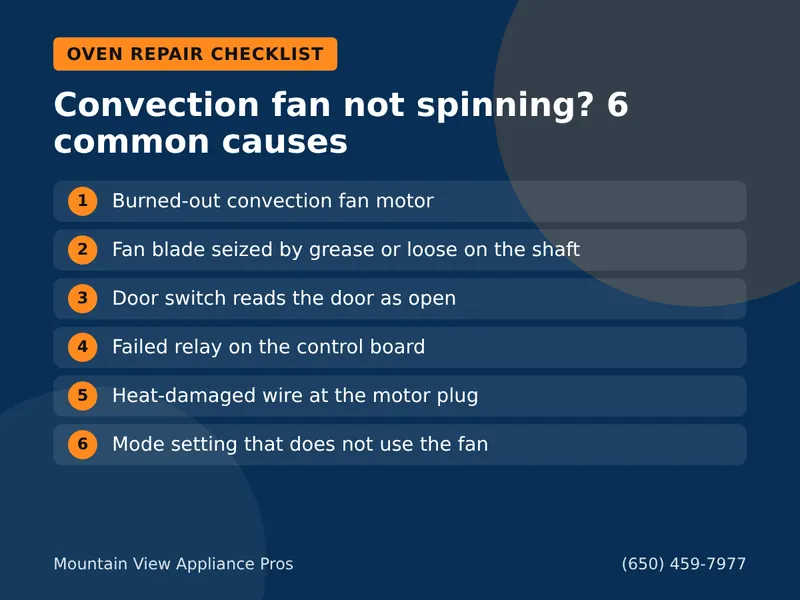
A convection fan that will not spin is usually a failed fan motor, a seized blade, a door switch or a relay on the control board. Here is how to narrow it down.
Read the guideThe drum turns, the timer runs, and the clothes come out cold and wet. Here is what usually causes a dryer to stop heating, with separate checks for gas and electric models.
Call Now – (650) 459-7977
A dryer that runs but won't heat usually has a blown thermal fuse, a failed heating element (electric), a failed igniter or gas valve coil (gas), or a tripped breaker. A blown thermal fuse often means the dryer overheated because the vent is blocked.
The fix depends on whether you have a gas or electric dryer. Gas dryers have a power cord and a gas line. Electric dryers use a large 240-volt plug and no gas line.
This one-time safety fuse blows when the dryer gets too hot. It is cheap to replace, but it is a warning sign that airflow is blocked.
The element is a coil of wire that glows hot. Over time it can break. A technician can test it for continuity in a few minutes.
These thermostats control the temperature. If one fails, the element may never turn on.
The igniter glows to light the gas. If it is cracked or weak, the burner never lights. You may hear clicks but see no flame.
The coils open the gas valve. A common sign is a burner that lights briefly and then goes out, or does not light after the first few minutes.
The flame sensor tells the dryer when the burner is lit. If it fails, the gas valve may not open. A blown thermal fuse can also stop the burner.
If you ever smell gas near the dryer, do not use it. Leave the house and follow PG&E's gas safety steps. The EPA also recommends having gas dryers and other fuel-burning appliances checked and properly vented to prevent carbon monoxide.
Dryer cold and the vent is clear? Call us and a technician can test the fuse, element, igniter, and valves.
A thermal fuse that blows again and again means the dryer is overheating. The usual cause is a blocked or crushed vent, or heavy lint inside the cabinet. Fix the airflow first, or the new fuse will blow too.
Our guide on dryer vent cleaning and fire safety explains how to check and clean the vent safely.
Call if the breaker and vent are fine but there is still no heat, if the fuse keeps blowing, or if you have a gas dryer and the burner won't light. Our dryer repair service fixes gas and electric dryers from Whirlpool, Maytag, Samsung, LG, GE, and more. Our repair cost guide shows typical dryer repair prices.
If your dryer is old and you are thinking about replacing it, the ENERGY STAR clothes dryer guide lists efficient models, including heat pump dryers.
On electric dryers, the most common causes are a blown thermal fuse, a failed heating element, or a tripped breaker. On gas dryers, it is usually a failed igniter, gas valve coils, or a blown thermal fuse.
A thermal fuse blows when the dryer overheats. That almost always means a blocked vent or lint buildup. Replacing the fuse without fixing the airflow will not solve the problem.
Stop using it until you find the cause. If the fuse blew from overheating, running the dryer again with a blocked vent raises the fire risk.
Tell us what your appliance is doing. We will quote the visit on the phone and book the first open slot, often the same day.
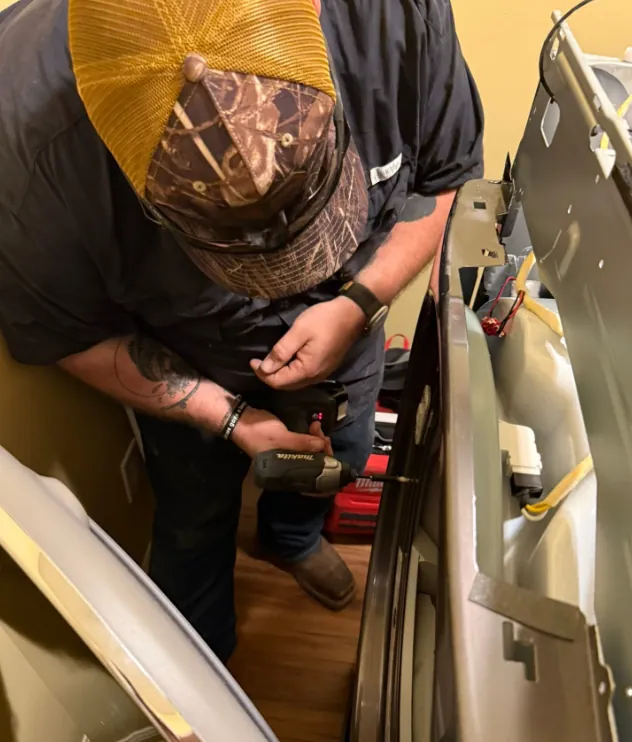
A convection fan that will not spin is usually a failed fan motor, a seized blade, a door switch or a relay on the control board. Here is how to narrow it down.
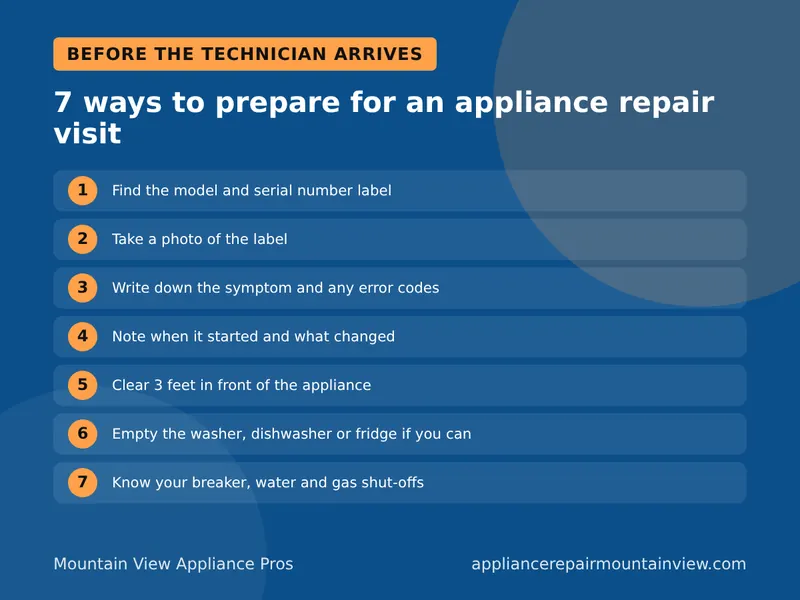
Read the guideA good repair visit starts with a diagnosis, a clear price and your OK before work begins. Here is what to have ready and what to ask so the repair goes fast.
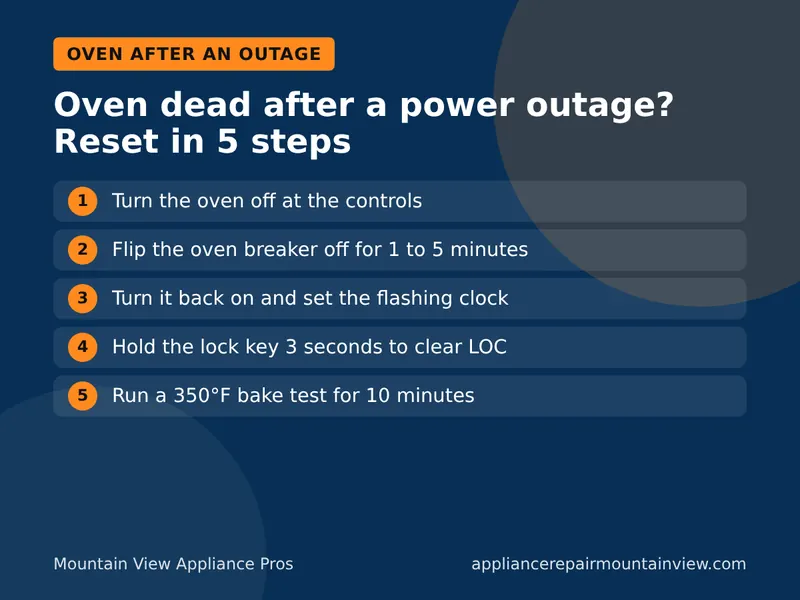
Read the guideMost ovens come back with a breaker reset and a clock set. If the display stays dark or the oven will not heat, a surge may have hit a fuse or board.
Read the guideCall now to talk to a real person, any time of day or night.
(650) 459-7977 Call Now – (650) 459-7977