Dishwasher Not Heating Water: Causes, Checks and Repair Costs
Wash water that never gets hot leaves grease, film and germs behind. Here is how to tell whether the problem is your hot water supply or the dishwasher itself.
Read the guideYou start a load and a hot, burnt smell drifts out of the laundry room. Sometimes it fades in a minute. Sometimes it gets stronger. Either way, it is your dryer telling you that something is too hot or rubbing where it should not. Here is how to read the smell, what to do right now and which fixes need a technician.
Call Now – (650) 459-7977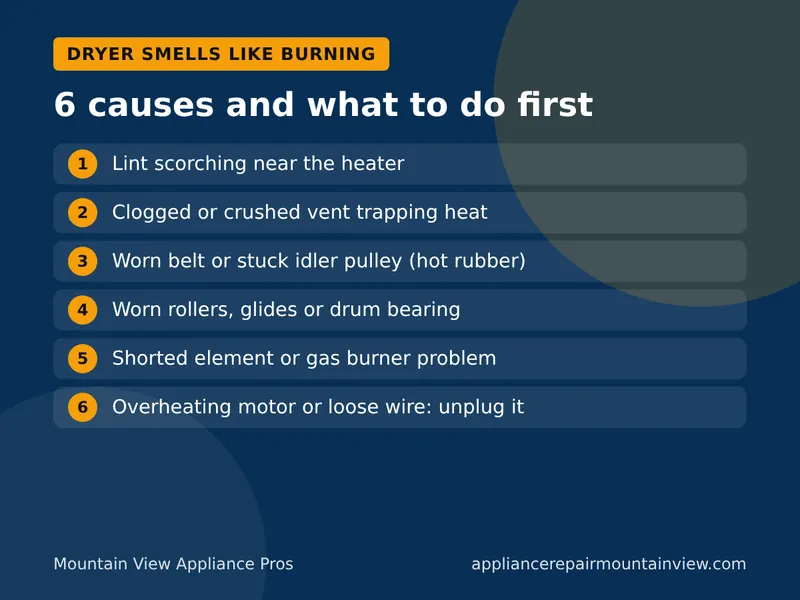
A burning smell from a dryer usually means one of six things: lint scorching near the heater, a clogged vent trapping heat, a worn drum belt, failing drum rollers or glides, a shorted heating element or gas burner problem, or an overheating motor or wire. Lint and vent problems are the most common, and they are also the most dangerous.
If the smell keeps coming back after the checks below, our dryer repair Mountain View technicians can find the hot spot, test the heater and safety parts, and fix it, often in one visit.
Stop the dryer right away, then cut its power. Do not open the door and wave the smell away while the drum is still spinning. Let the dryer cool for at least 30 minutes before you look inside. If you see smoke, flames or a glow through the door, leave the room, close the door behind you and call 911.
Burning smell will not go away? Call now for same-day dryer repair in Mountain View.
The type of smell is a good clue. A dusty, toasted smell points to lint. A hot rubber smell points to the belt. An electrical or plastic smell points to wiring, the motor or the heater. Use the table and the list below to narrow it down before you call.
| What you smell or hear | Most likely cause |
|---|---|
| Dusty, toasted smell, long dry times | Lint buildup or a clogged vent |
| Hot rubber, squeal or thump | Worn belt or stuck idler pulley |
| Hot metal or plastic, scraping sound | Worn drum rollers, glides or bearing |
| Sharp electrical smell, breaker trips | Shorted heating element or wire |
| Smell only when the motor starts | Overheating drive motor |
| Faint smell on the first loads of a new dryer | Factory coating burning off |
Lint escapes past the screen and builds up inside the cabinet, around the heater housing and the blower. When it gets close to the element or burner, it scorches. This is the classic dusty burning smell. A deep clean inside the cabinet fixes it, but it means taking off panels, so most people leave it to a technician.
The vent carries hot, wet air outside. When it is packed with lint, crushed behind the dryer or blocked by a bird nest at the outside hood, heat stays in the dryer. Clothes take two cycles, the top feels hot and the safety thermostat starts cycling the heat. Our dryer vent cleaning and fire safety guide covers what a full clean includes.
The belt wraps around the drum and the motor. If the idler pulley seizes or the belt glazes, the motor spins while the belt slips. Friction makes the hot rubber smell. If the belt snaps, the drum stops turning and the dryer may shut off on its own.
The drum rides on rollers or felt glides. When they wear out, metal rubs on metal or plastic. You will usually hear a rumble or scrape along with a hot smell. Replacing rollers and the belt together is a common repair.
On electric dryers, a broken element coil can touch the housing and arc. That gives a sharp electrical smell and can trip the breaker. On gas dryers, a burner that lights poorly or a misaligned flame can scorch lint in the burner tube. Both need meter testing and safe parts work.
A motor with worn bearings or a jammed blower wheel runs hot. A loose wire at the terminal block can also heat up and melt its insulation. If the smell is strongest at the back where the power cord connects, unplug the dryer and do not use it until it is checked. Electric dryers run on 240 volts, so this is not a DIY job.
It can be. Lint is very flammable, and clothes dryers are a well known cause of home fires. A one-time smell from a dryer sheet stuck on the heater or a new dryer's first load is usually harmless. A smell that comes back, gets stronger, or comes with smoke, a tripped breaker or scorched clothes is a reason to stop using the dryer.
The U.S. Fire Administration recommends cleaning the lint screen before or after every load and keeping the vent clear. Those two habits remove most of the risk.
You can safely clean the lint screen, check the vent hose behind the dryer and check the outside vent flap. Anything inside the cabinet, like the heater, belt, rollers, thermal fuse or wiring, needs the dryer opened. That work involves 240 volts or a gas line, so it is best left to a trained technician.
If the dryer also shuts itself off mid-cycle, read why a dryer turns off after a few minutes before you call. That pattern often means a clogged vent is tripping the safety thermostat.
In Mountain View we see two patterns. Many older homes and apartments in Old Mountain View, Monta Loma and the Rex Manor area have long vent runs that go through a wall or up to the roof. Those runs collect lint fast. Stacked laundry units in condos near the Castro Street area and North Bayshore also run hot because they sit in small closets with little air.
Townhomes built in the 2000s and 2010s often vent a dryer through the roof. Lint builds up at the top where you cannot see it. If your dryer is on an upper floor and drying times keep creeping up, the roof vent is the first place to look. We serve every Mountain View ZIP code: 94040, 94041 and 94043.
Most dryer repairs in Mountain View cost about $150 to $400 with parts and labor. A belt and idler pulley, a set of rollers, a thermal fuse or a heating element all usually fall in that range. The technician confirms the cause and gives you the price before any work starts.
| Appliance | Typical repair (approx.) |
|---|---|
| Dryer | $150 – $400 |
Dryers usually last about 10 to 13 years. If yours is younger than that, a repair in this range is almost always worth it. If it is older and the drum, motor and heater are all worn, our guide on whether to repair or replace an appliance can help you decide.
Clean the lint screen every load, have the full vent cleaned about once a year, and do not overload the drum. Big loads make the dryer run longer and hotter and wear out the belt and rollers sooner. If you use dryer sheets, wash the screen every month so air can pass through it.
More dryer and range help: a dryer turns off after a few minutes, a dryer that takes two cycles to dry and why is my oven not turning on. For anything else in the kitchen or laundry room, see our appliance repair in Mountain View services.
No. Stop the cycle, unplug the dryer or turn off its breaker, and let it cool. Lint near the heater is the most common cause of dryer fires. Use it again only after the smell has a clear, harmless cause, like a new dryer's first run or a dryer sheet that slipped behind the drum.
A new dryer can give off a light hot or oily smell for the first few loads while factory coatings burn off the heater. It should fade after two or three cycles. If it gets stronger, or you smell plastic or rubber, stop and have it checked.
Yes. A blocked vent traps heat inside the cabinet. The dryer gets hotter than it should, lint near the heater can scorch, and safety parts like the thermal fuse start to fail. Long dryers that take two cycles to dry and a hot top panel are the warning signs.
A rubber smell usually points to the drum belt. When the belt is worn, glazed or slipping on a stuck idler pulley, friction heats it up. A squeal or a thump often comes with it. The belt and pulley are common, affordable parts.
Most dryer repairs in Mountain View cost about $150 to $400 with parts and labor. Belts, rollers, idler pulleys, thermal fuses and heating elements usually fall in that range. You get the price before any work starts.
Tell us what your appliance is doing. We will quote the visit on the phone and book the first open slot, often the same day.
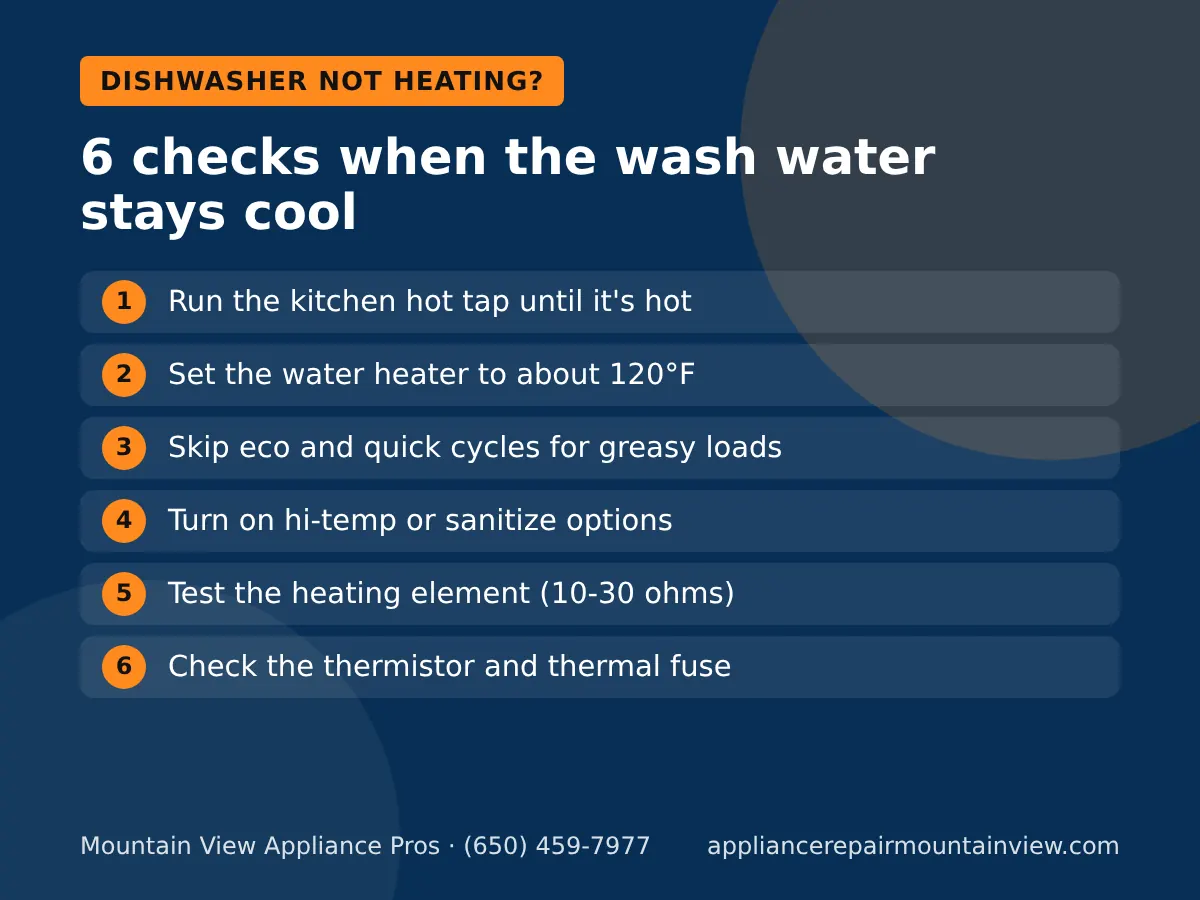
Wash water that never gets hot leaves grease, film and germs behind. Here is how to tell whether the problem is your hot water supply or the dishwasher itself.
Read the guidePowder caked in the drawer, softener left behind, or the whole cup still full? Here is why washers stop pulling detergent and what to check before you call.
Read the guide4C, 5C, UE, dC, LE, OE and more: what each Samsung washer code means, the quick checks you can do first, and when the part behind it needs a repair.
Read the guideCall now to talk to a real person, any time of day or night.
(650) 459-7977 Call Now – (650) 459-7977One call covers every major appliance in your home. Pick a service for signs, costs, and how the repair works.
Fridge warm, leaking, or noisy? We fix cooling, defrost, and sealed system problems.
See refrigerator repair →Washer won't drain, spin, or fill? We repair top-load and front-load machines.
See washer repair →No heat or no tumble? We fix gas and electric dryers and clear vent problems.
See dryer repair →Dirty dishes or standing water? We repair pumps, valves, and control boards.
See dishwasher repair →Oven not heating or heating unevenly? We repair wall ovens and ranges.
See oven repair →Burner won't light or element won't heat? We fix gas, electric, and induction.
See stove & cooktop repair →No ice, slow ice, or leaks? We repair built-in and freezer ice makers.
See ice maker repair →Not heating or dead display? We repair over-the-range and built-in units.
See microwave repair →